Differences Between Residential and Commercial Electricians
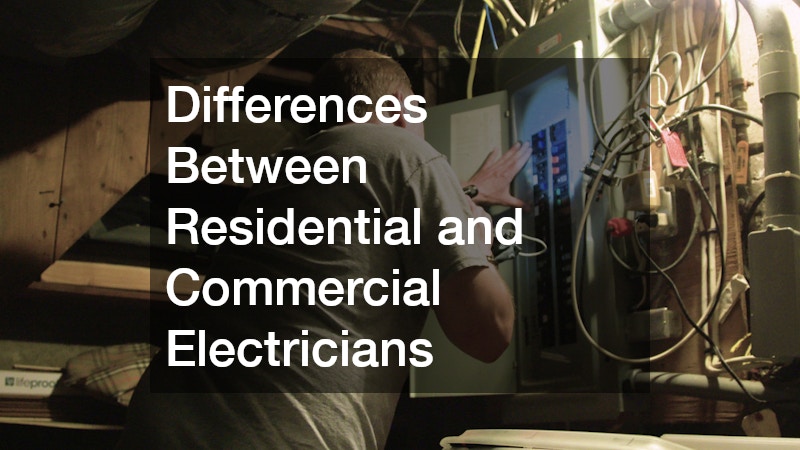
Electricians play a crucial role in our daily lives, providing the electrical expertise needed to power homes and businesses. However, not all electricians are created equal. There are distinct differences between residential and commercial electricians, which are critical to understand when seeking electrical services. Each specialization requires a unique skill set, a set of tools, and a work environment understanding. Whether you’re a homeowner or a business manager, knowing whom to hire is essential for the safety and efficiency of any electrical project. Residential and commercial electricians have different focuses and skills, unique to their specific work environments. Generally, residential electricians focus on installing, maintaining, and upgrading electrical systems within homes and apartments. In contrast, commercial electricians work in larger settings, such as office buildings, factories, and retail stores, handling more complex electrical systems. This article will delve into these differences, providing insights into what sets these two types of electricians apart. The distinction between residential and commercial electricians is not just about the location of their work, but also about the complexity and scope of the tasks they undertake. From handling high voltages to adhering to different regulatory standards, each specialization demands a thorough understanding of the specific requirements involved. While they share the common goal of ensuring safety and functionality, the paths to achieving these goals differ significantly between residential and commercial electricians. One of the primary differences between residential and commercial electricians is their work environments. Residential electricians work in private homes, apartments, and other residential properties, often dealing with tasks such as wiring new houses or retrofitting older homes with updated electrical systems. These professionals need to have an excellent understanding of residential electrical code and the ability to work in smaller, confined spaces. The work might involve handling smaller-scale projects, which require attention to detail and an understanding of homeowner needs and safety concerns. In contrast, commercial electricians operate in various environments like office buildings, warehouses, factories, and retail spaces. These settings typically require the handling of larger projects and more complicated electrical systems. This could involve installing electrical components in new buildings, upgrading existing systems to meet increased power demands, or maintaining key equipment and facilities integral to business operations. The commercial electrician’s role often demands a greater familiarity with heavy-duty electrical systems and a broad understanding of business and industry-specific compliance regulations. Commercial electricians must also be adept at working within the constraints of a bustling, multi-functional environment. Their work might require troubleshooting complex systems or coordinating with other construction professionals on-site. Given the scale and scope of commercial projects, electricians in this field need advanced problem-solving skills and the ability to read and interpret blueprints and technical drawings. Their expertise ensures the smooth operation of the electrical infrastructure that is vital to business functions and safety. The skill set required for residential electricians primarily involves proficiency in installing and repairing wiring, outlets, and other electrical components used in homes. These electricians need to be skilled at diagnosing electrical issues and implementing solutions safely, often working in attics, basements, and crawlspaces. Training for residential electricians typically involves an apprenticeship program or technical school education, focusing on domestic electrical systems, safety standards, and local codes. Commercial electricians, on the other hand, must have a deeper understanding of complex electrical systems and how they integrate into large-scale operations. Their training includes learning to handle higher voltage systems, circuit breakers, and complex wiring systems unique to commercial properties. They often undergo more extensive on-the-job training and continue to update their skills with ongoing education, keeping abreast of advancements in electrical technologies and regulatory changes in commercial construction. Additionally, commercial electricians require robust problem-solving abilities and technical proficiency to install and maintain lighting systems, backup generators, and specialized electrical machinery. Strong analytical skills and the ability to collaborate effectively with engineers and project managers are essential. As such, certification for commercial electricians often demands a broader and more intensive educational background than is typically required for residential electricians. Abiding by distinct regulatory standards is another area where residential and commercial electricians differ. Residential electricians must adhere to specific local building codes that govern electrical work in homes. These codes ensure that all electrical installations are safe and compliant with community standards. The work often involves routine inspections to ensure adherence to regulations, providing peace of mind for homeowners and ensuring safe living conditions. Commercial electricians, however, are subject to a more diverse and complex set of regulations. They must comply with industry-specific safety standards, such as the National Electrical Code (NEC), as well as any additional regulations pertinent to the nature of the business or the type of facility. This might include adhering to Occupational Safety and Health Administration (OSHA) standards, particularly where hazardous materials or environments are involved. These regulations are in place to protect workers and ensure the safety of commercial operations. Recognizing the differences between residential and commercial electricians not only aids in making informed choices but also underscores the diverse field of electrical work. Whether upgrading a home electrical system or equipping a commercial operation, these professionals play a significant role in enhancing our quality of life and facilitating sustainable, safe development. Thus, acknowledging their unique contributions and specializations is essential for fostering collaborative and efficient projects across different sectors. Work Environments
Skill Sets and Training
Regulatory Standards




Post Comment